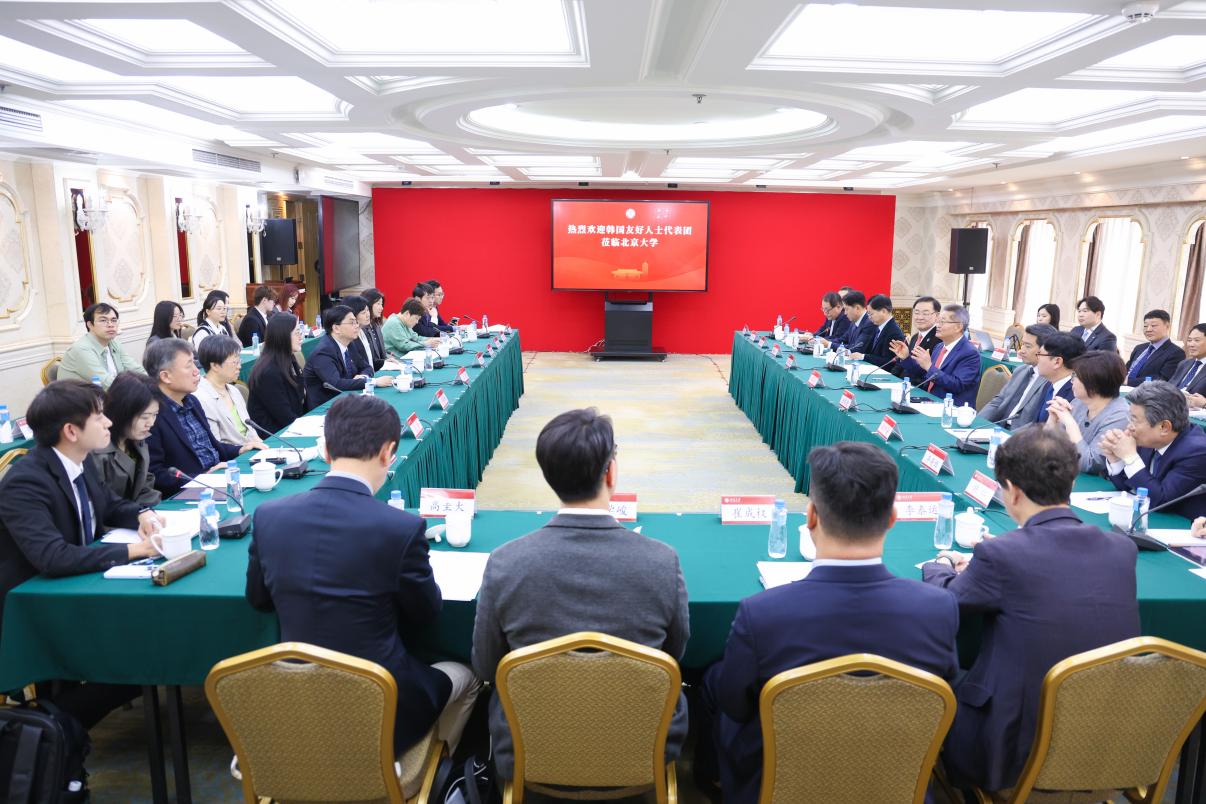
On the morning of April 21, an ROK friendship delegation,led by Director Song Ki-chul of the Korea International Culture Exchange Center, visited Peking University. Representatives from Peking University and the delegation jointly held a symposium titled "Sino-ROK Historical and Cultural Exchange" at the Yingjie Exchange Center.
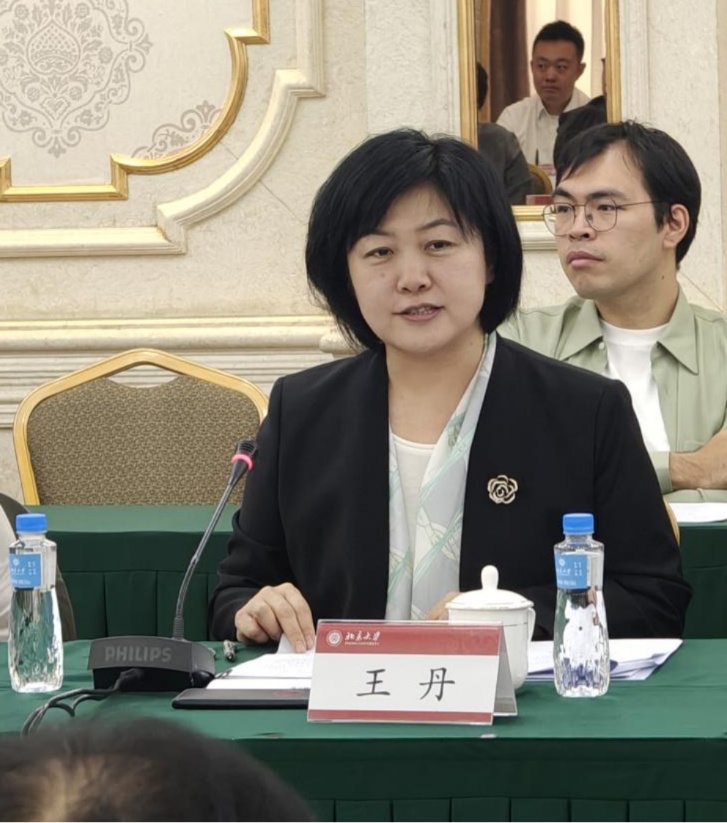
The symposium was moderated by Associate Professor Li Tingting, Chair of the Department of Korean Language and Culture at the School of Foreign Languages, Peking University. To open the symposium, Professor Wang Dan, Vice Dean of the School of Foreign Languages, reviewed historical Sino-ROK cultural exchanges. Drawing on her practical experience in Sino-ROK exchanges, she systematically introduced the achievements made by Department of Korean Language and Culture in talent cultivation and academic accumulation since its establishment, as well as the development outcomes of the Center for Korean Peninsula Studies. Furthermore, she highlighted the tangible results Peking University has achieved in fostering Sino-ROK connectivity in the humanities, mutual academic learning, and cultural inheritance through diverse platforms, including inter-university cooperation and youth exchange, under the guidance of head-of-state diplomacy.
Subsequently, representatives from both China and the ROK delivered keynote speeches on Sino-ROK cooperation and exchanges.
President Ko Myung-jin of the National Council of Youth Organizations in Korea delivered a speech on Sino-ROK exchanges, highlighting the practical outcomes of youth-to-youth interactions between the two nations. He also outlined promising prospects for deepening youth engagement and fostering intergenerational friendship, offering actionable recommendations, including establishing additional international exchange programs. Professor Wu Jing from the School of Journalism and Communication at Peking University synthesized the current landscape of Sino-ROK cultural exchanges and new media communication resources, articulating her vision and expectations for bridging the hearts of the two peoples and promoting long-term, stable cooperation through diverse media. In his address, Director Chun In-keon of the Kansong Art Museum highlighted a pair of Chinese stone lions from the Qing Dynasty, measuring approximately 1.9 meters tall and weighing 1.25 tons. In early 2026, in honor of founder Chun Hyung-pil and his conviction in "safeguarding the nation through culture," the Kansong Art Museum officially decided to donate and return this pair of stone lions to China. From protecting ROK cultural heritage with private wealth to returning Chinese artifacts across borders, the Kansong Art Museum's trajectory transcends mere collection and exhibition, emerging as a vivid testament to East Asian cultural continuity and a transnational humanistic spirit. Chairman Ko Dae-hwa of the Kim Koo Cultural Industry Company focused his presentation on their cultural industry initiatives, outlining specific directions and viable pathways for pragmatic Sino-ROK collaboration in the cultural and creative sectors.
In addition, Professor Kim Donggil from the Department of History at Peking University, along with Tenured Associate Professor Keum Ji-a and Associate Professor Song Wenzhi from the School of Foreign Languages at Peking University, delivered important remarks, integrating their respective research projects with their visions for the future of Sino-ROK cultural exchanges. Furthermore, two student representatives—Huang Jiaxin from the Department of Korean Language and Culture at the School of Foreign Languages, and Lee Seung-jun from the School of International Studies—shared their practical experiences in participating in cultural exchanges.
The symposium was rich in content and highly productive, serving as an important platform for deepening friendly exchanges between China and the ROK. In the current international landscape, as important neighbors, strengthening Sino-ROK cooperation not only serves the fundamental interests of the two peoples but also contributes positively to the peaceful development of the region and the world at large. The participants unanimously agreed that this exchange enhances mutual trust and builds consensus for cooperation, thereby providing impetus for the sustained and healthy development of Sino-ROK people-to-people friendship and cultural exchanges.
Text by: Huang Jiaxin
Photos by: Office of International Relations
Translated by Xing Yifei