
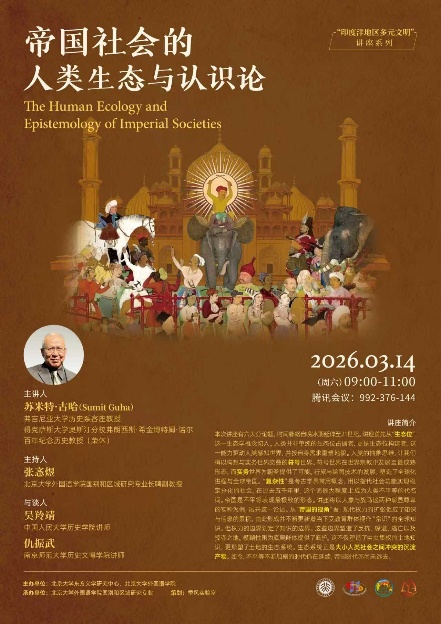
On the morning of March 14, 2026, Professor Sumit Guha, the Frances Higginbotham Nalle Centennial Professor in History (Emeritus) at the University of Texas at Austin, was invited to deliver an online lecture titled "The Human Ecology and Epistemology of Imperial Societies". The lecture was hosted by the Center for East Asian Studies and the School of Foreign Languages at Peking University, organized by the Program of International and Regional Studies at the School of Foreign Languages, and served as one of the "Diverse Civilizations of the Indian Ocean Region" lecture series, as well as part of the academic event series commemorating the 80th anniversary of the establishment of Oriental Studies at Peking University.
The lecture was moderated by Zhang Minyu, tenured Associate Professor, Program of International and Regional Studies, School of Foreign Languages, Peking University, with Wu Lingjing, lecturer at the School of History, Renmin University of China, and Qiu Zhenwu, lecturer at the School of History and Culture, Nanjing Normal University, serving as discussants; over 70 faculty members and students from institutions such as Peking University, Renmin University of China attended the session.
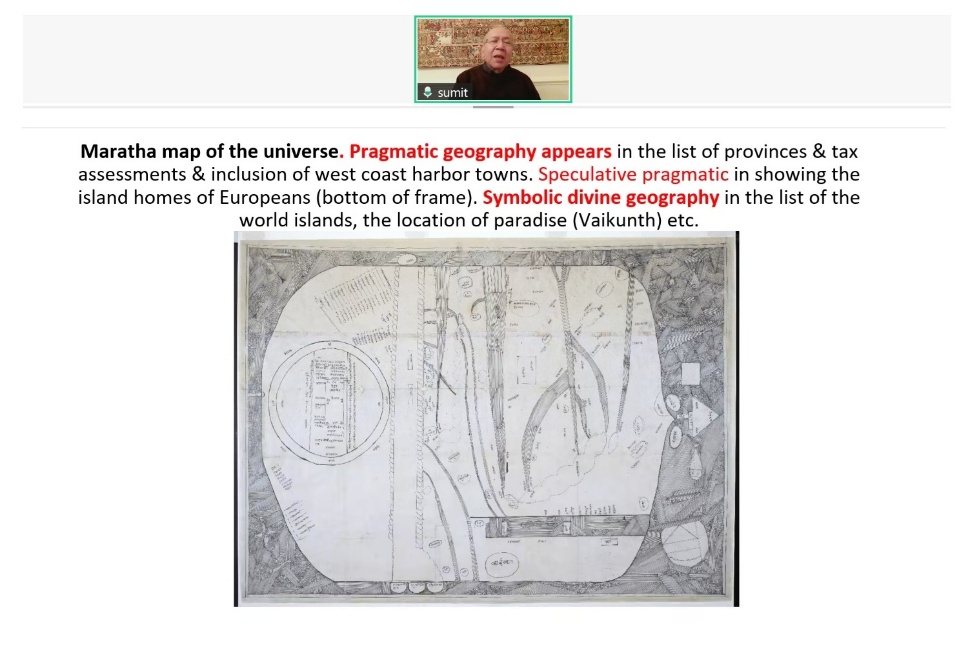
Professor Guha began with the ecological concept of the "niche," proposing that humans are not only occupants of niches but also their active constructors. The accumulation, storage, and dissemination of information have gradually become an important foundation for the operation of increasingly complex human societies. Within imperial systems, central power continuously transforms local knowledge into manageable and cumulative state knowledge through surveying, tax systems, and archival frameworks, while local societies rely on practical experience regarding terrain, seasons, and resources to maintain their own living spaces and occasionally resist imperial control.
During the commentary and discussion session, Dr. Wu Lingjing pointed out that Professor Guha’s research, by integrating imperial history, ecological history, and social history, provides a new perspective for understanding local resistance and non-human factors during imperial expansion. Dr. Qiu Zhenwu, drawing on his own research, further discussed the relationship between environmental governance, local knowledge, and social structures. The lecture concluded successfully amidst enthusiastic discussion.
Text and Images: Liu Yiyang