On the morning of August 26, 2026, a Bangladeshi diplomatic delegation, led by Sikder Mohammad Ashrafur Rahman, Director General of the Bangladesh Foreign Service Academy, visited the Center for South Asian Studies at Peking University and participated in a training and exchange event in Room 208 of the Democracy Building. Wang Xu, Executive Deputy Director of the Center, attended the event and delivered keynote lectures.
At the opening of the event, Wang Xu delivered two keynote lectures, titled respectively “Challenges and Choices for South Asia amid Turbulence and Transformation” and “People-Centered Economic Development and National Security.” Drawing on the lessons of instability in the Middle East and fruitful outcomes of China-Bangladesh cooperation, Wang pointed out that amid profound changes unseen in a century, all countries should recalibrate their security perceptions, reshape multilateral cooperation, uphold strategic autonomy, and maintain control over their own development paths. He further elaborated on the in-depth integration of the people-centered approach to economic development with the national security system. He emphasized that through practices such as poverty alleviation and shared development, China has achieved sound interaction between high-quality development and high-level security. This practical experience provides an important reference for countries of the Global South, including Bangladesh, in exploring development paths suited to their respective national conditions.
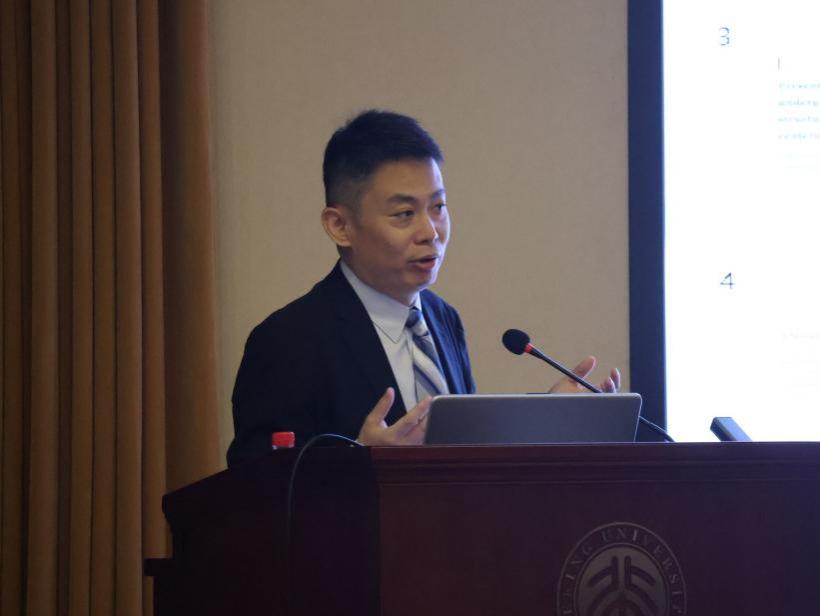
Wang Xu giving keynote lectures
During the Q&A session, members of the delegation actively raised questions based on their on-site observations and experiences during their visit to China. Their discussions covered topics including regional security in South Asia, prospects for practical China-Bangladesh cooperation, and choices of development paths. Wang Xu responded to each question in detail. Both sides also engaged in an extensive and in-depth discussion on practical approaches to implementing a people-centered development philosophy. Wang emphasized that security is the prerequisite for development, while development provides the safeguard for security. Only by consistently making the people’s aspiration for a better life the goal of development can countries achieve positive interaction between economic prosperity and long-term social stability.
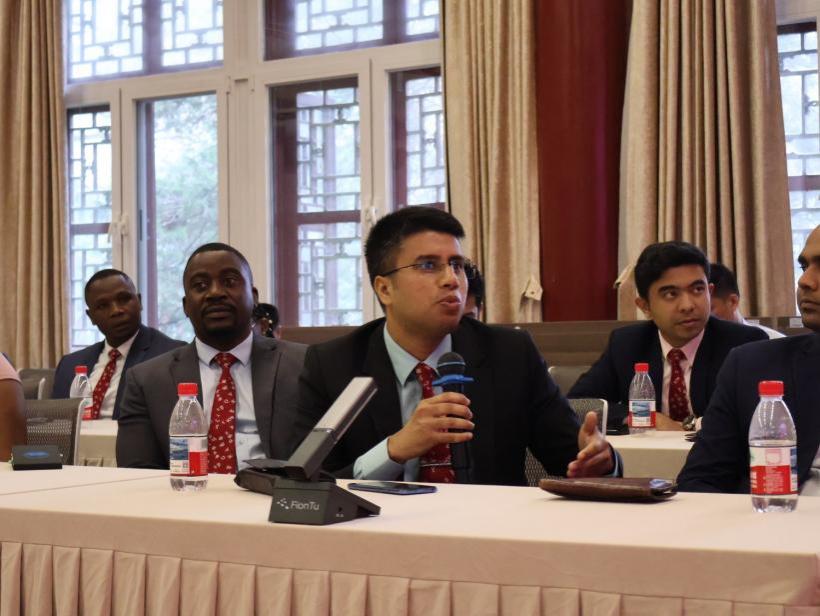
Discussion Session
In his remarks, Rahman expressed sincere gratitude for the careful arrangement and warm reception provided by the Center for South Asian Studies at Peking University. He noted that the lectures were informative and insightful, showcasing the development path that China has explored through practice and offering valuable lessons for developing countries, including Bangladesh, in advancing the modernization of national governance. Against the backdrop of ongoing global transformation, countries need to promote mutual learning and exchange of governance experience and to jointly foster synergy for inclusive and sustainable development. The exchange event has not only enhanced mutual understanding and recognition between China and Bangladesh on governance approaches, but also built a platform for closer cooperation between scholars and policy practitioners of the two countries. The event concluded successfully in a warm and friendly atmosphere of academic exchange.
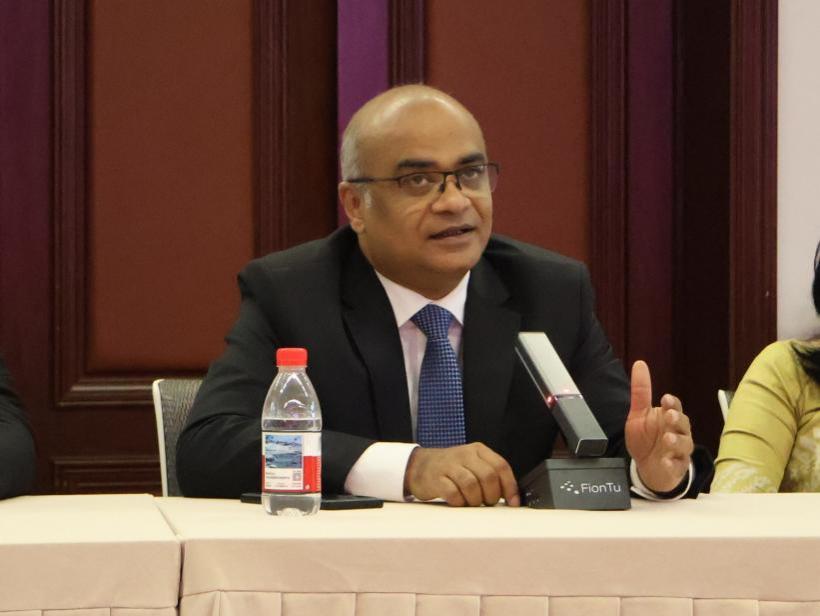
Rahman expressing gratitude
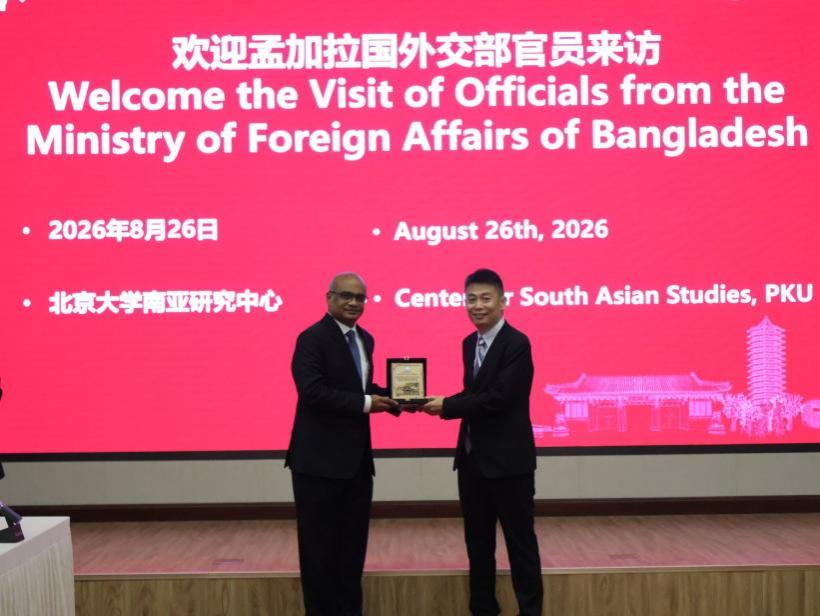
Rahman presenting a gift to the Center for South Asian Studies, PKU
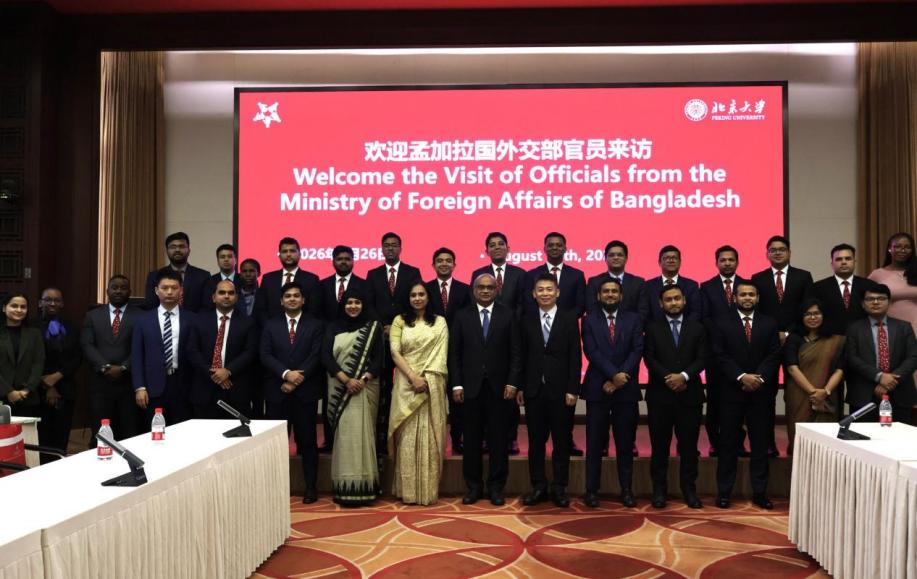
Group photo
Text and Photos: Jin Yunhao
Translated by Chen Ying