Bangkok, 20 December 2025 –– The School of Foreign Languages at Peking University and the Faculty of Archaeology at Silpakorn University jointly hosted the China-Thailand Buddhism and Buddhist Art Symposium to celebrate the 50th anniversary of the establishment of diplomatic relations between China and Thailand. Professor Fu Zhiming, Vice Dean of the School of Foreign Languages at Peking University, led a delegation of faculty members and students from the Department of Southeast Asian Studies to attend the symposium and, during the visit, also paid an official visit to Mahidol University at the invitation of its leadership.
Held in commemoration of the 50th anniversary of China-Thailand diplomatic ties, the symposium brought together scholars from both countries for high-level academic exchanges on Buddhist art, China-Thailand Buddhist cultural interaction, and Buddhist archaeology. More than 100 participants attended the sessions both online and onsite. The event also drew coverage from Matichon, one of Thailand’s most influential daily newspapers. The Peking University Institute of Thai Studies, the Princess Sirindhorn Science Technology and Cultural Exchange Center, and the Institute of Southeast Asian Studies supported the organization of the symposium and sent representatives to attend.
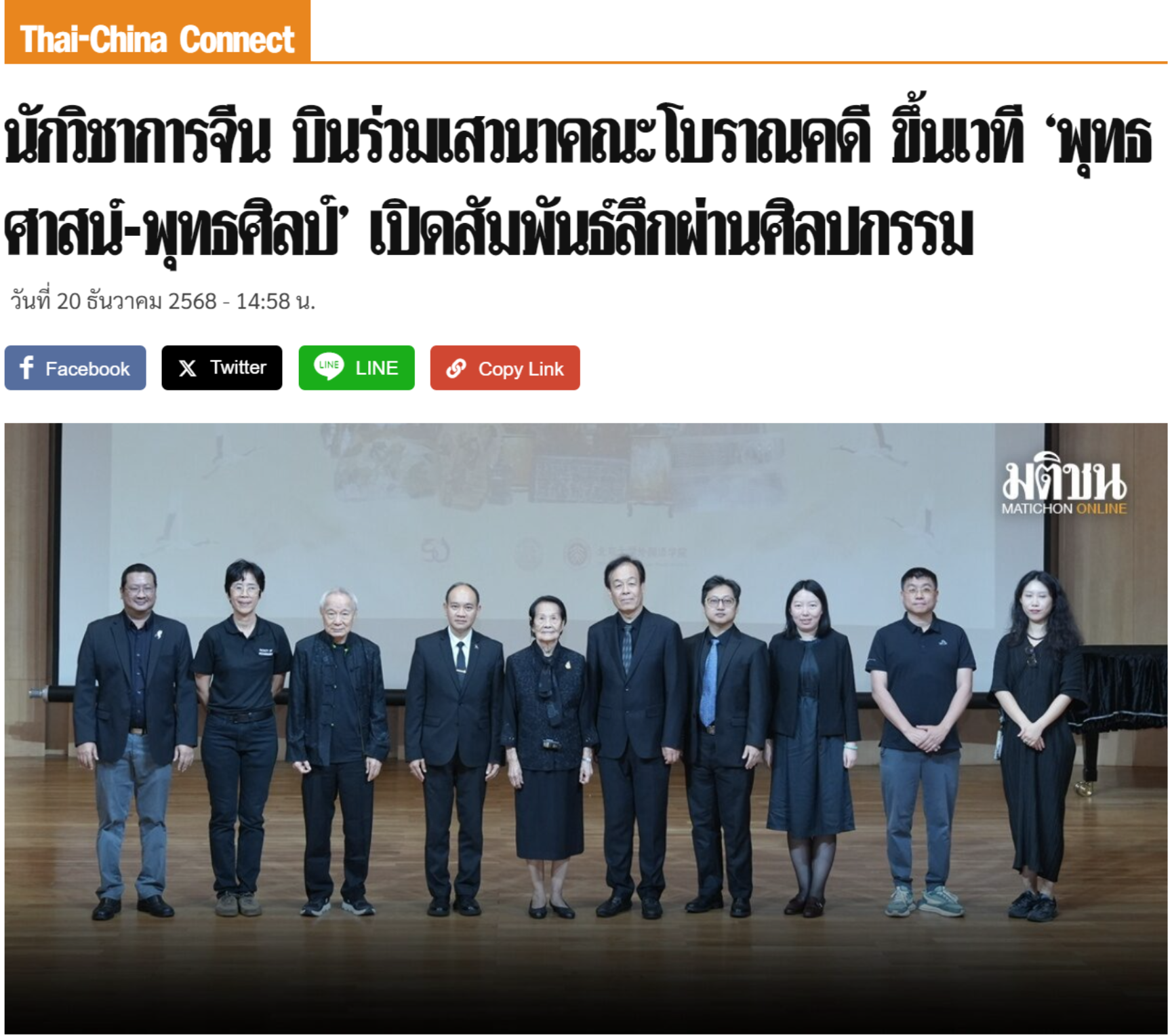
Coverage of the symposium by Matichon, a leading Thai newspaper
At the opening ceremony, the Dean of the Faculty of Archaeology at Silpakorn University delivered welcoming remarks to scholars and guests. Professor Fu Zhiming then addressed the audience on behalf of the School of Foreign Languages at Peking University, highlighting the symposium’s special significance in carrying forward the tradition of mutual learning between Chinese and Thai civilizations, and in enhancing mutual understanding and shared cultural prosperity between China and Thailand, as well as between China and ASEAN more broadly. The Chair of Silpakorn University’s University Council and former Minister of Culture of Thailand, Emeritus Professor Khunying Khaisri Sriaroon, also attended in person and delivered a speech. She congratulated the organizers on the successful convening of the symposium and presented commemorative books to the scholars and guests.
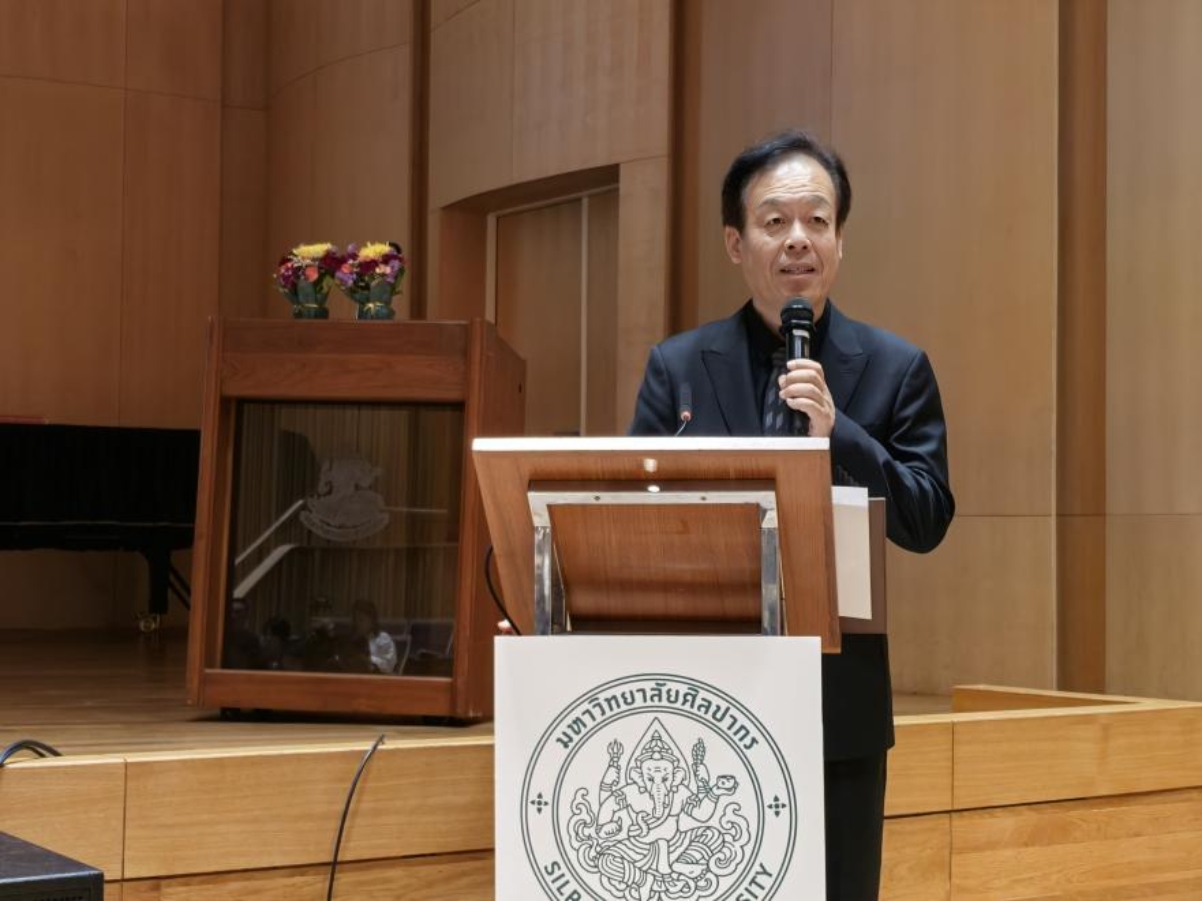
Vice Dean Fu Zhiming delivering remarks on behalf of the School of Foreign Languages
The symposium was divided into morning and afternoon sessions. The morning session focused on exchanges in Chinese and Thai Buddhist art, while the afternoon session examined Buddhist temple architecture and religious beliefs in the two countries. Professor Santi Leksukhum, an academician of the Royal Society of Thailand and an Emeritus professor at Silpakorn University, delivered the speech titled “Interwoven Motifs: The Artistic Dialogue between China and Thailand” . This was followed by a presentation by Zhang Zhe, lecturer from the Department of Southeast Asian Studies at Peking University, who shared her latest research findings under the title “A Brief Discussion on Sino-Thailand Cultural Exchange Factors in Thai Buddhist Murals”. Additional keynote presentations were delivered by Associate Professor Chen Liuling of Silpakorn University’s Faculty of Archaeology, Associate Professor Wu Tianyue of the Guangzhou Academy of Fine Arts, Associate Professor Rong-wan Thong-rongnin of Silpakorn University, and Assistant Professor Zhao Jinchao of Tongji University.
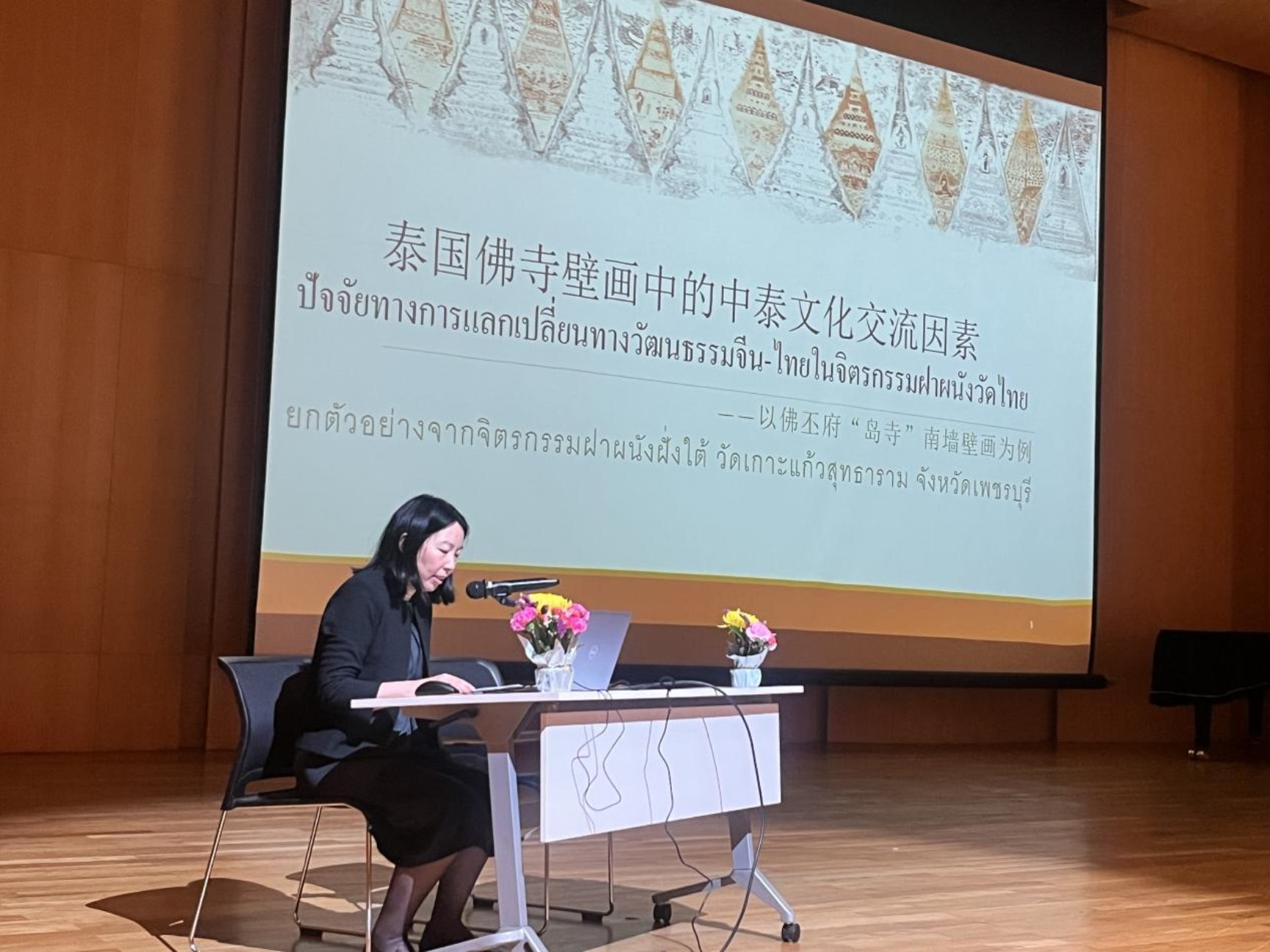
Lecturer Zhang Zhe delivering her keynote speech
During their stay in Bangkok, Professor Fu Zhiming, Tenured Associate Professor Jin Yong, and Lecturer Zhang Zhe also visited Mahidol University at the invitation of its Vice President. The two sides engaged in in-depth discussions on foreign language education in the age of artificial intelligence, interdisciplinary academic collaboration, the cultivation of internationally oriented talent, and faculty development. They also held positive and constructive exchanges on potential avenues for future cooperation.
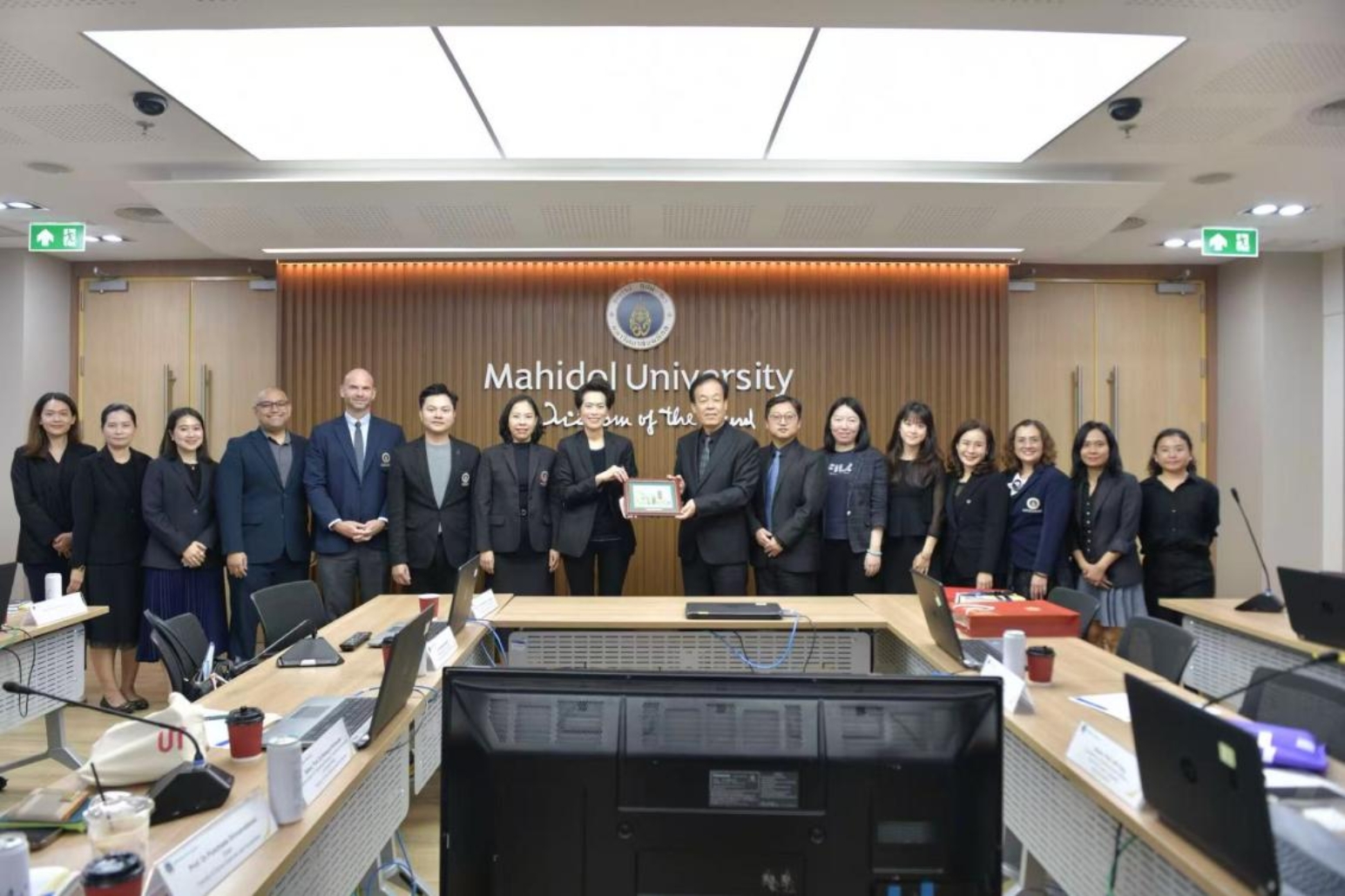
The Vice President of Mahidol University and her team welcoming Vice Dean Fu Zhiming and the delegation
Reported by: Xiong Ran
Photos by: Jin Yong, Zhang Zhe
Translated by: Gong Zhenning