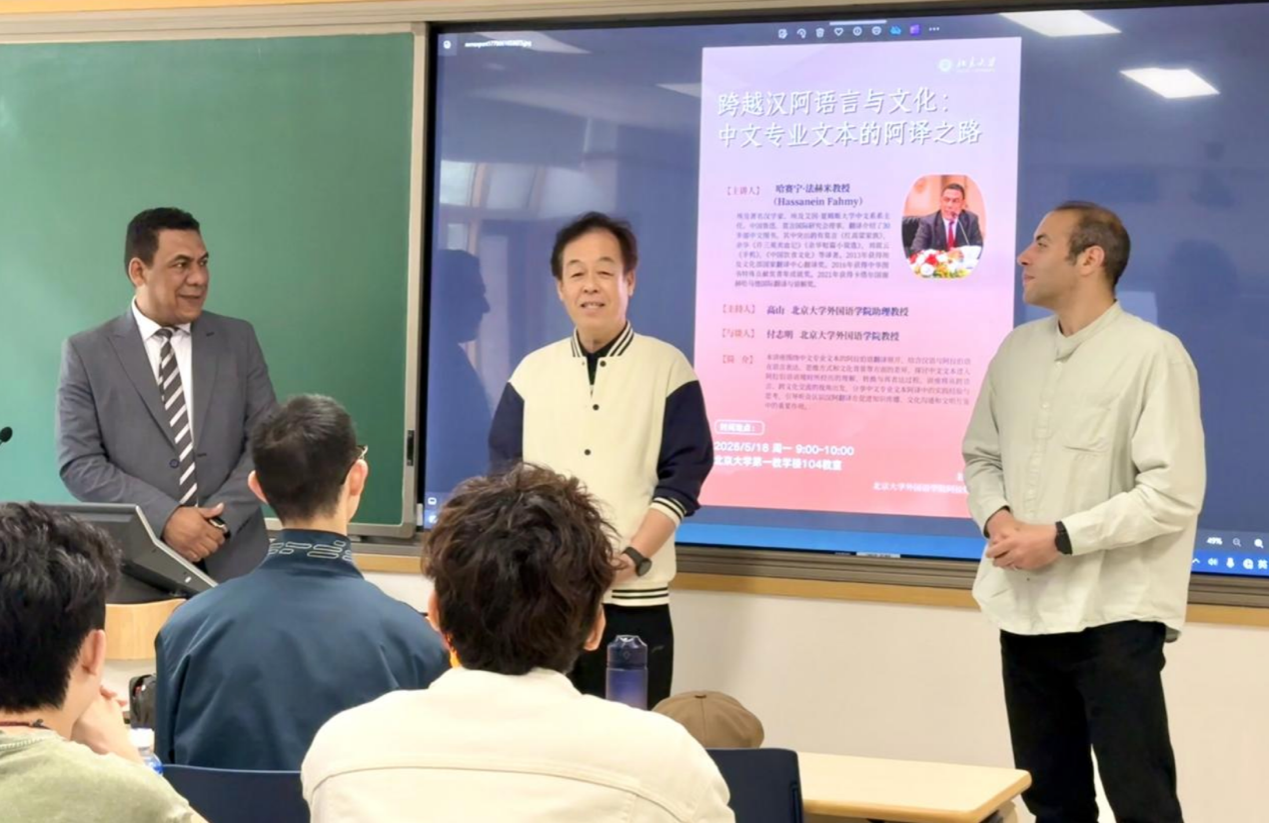
On the morning of May 18, 2026, the Department of Arabic Language and Culture of the School of Foreign Languages at Peking University successfully hosted a special lecture entitled “Bridging Chinese-Arabic Languages and Cultures: The Path of Translating Chinese Specialized Texts into Arabic” in Room 104 of the First Teaching Building. The lecture featured Professor Hassanein Fahmy Hussein, the distinguished Egyptian sinologist and translator, Chair of the Chinese Department at Ain Shams University, Egypt, and board member of the International Society for Lu Xun and Mo Yan Studies, as the keynote speaker. Professor Fu Zhiming, Associate Dean of the School of Foreign Languages and Sultan Qaboos Professor of Arabic Studies at Peking University, served as discussant and delivered concluding remarks. Professor Lin Fengmin, Deputy Director of the Social Sciences Division of Peking University and President of the China Arabic Literature Research Association, attended the lecture. The event was moderated by Assistant Professor Alaa Mamdouh Akef (Gao Shan). Undergraduate and graduate students from the Department of Arabic Language and Culture took part in the exchange.
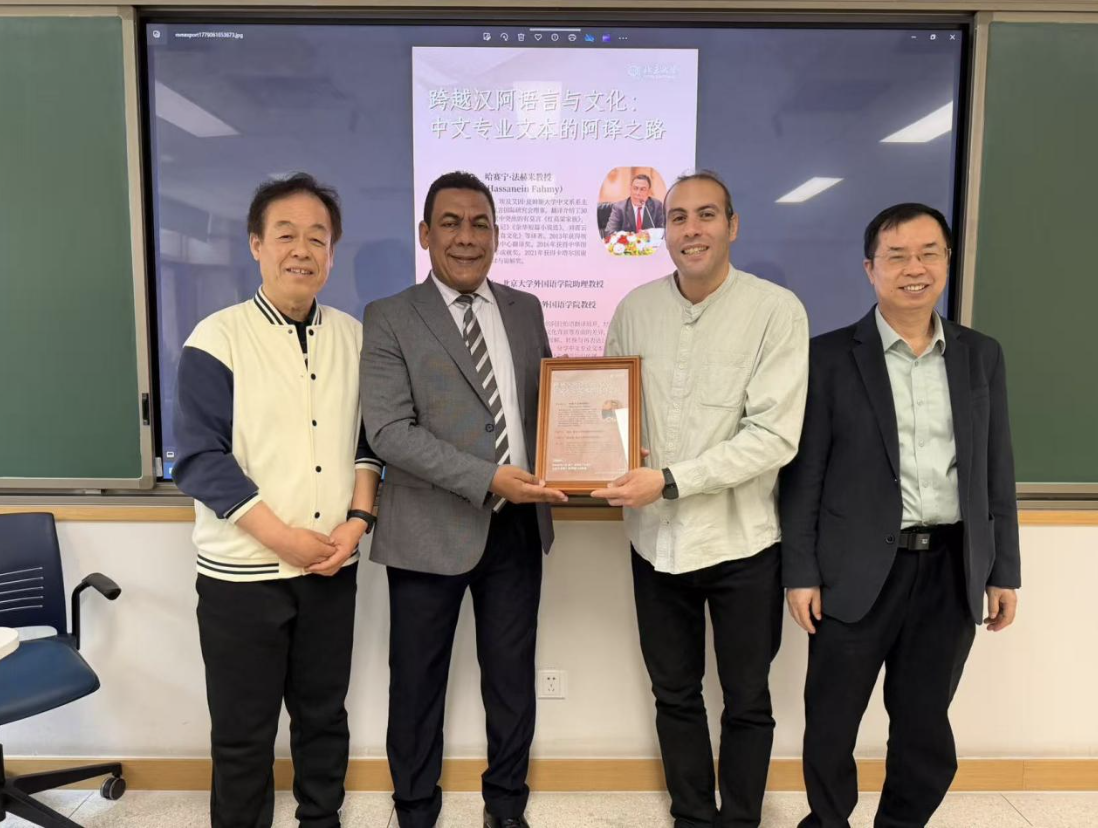
Lecture Venue and Guests
At the beginning of the lecture, the moderator, Professor Alaa Mamdouh Akef, extended a warm welcome to Professor Hassanein Fahmy Hussein. In his opening remarks, Professor Hassanein first recalled the deep historical ties between the Chinese Department at Ain Shams University and the Department of Arabic Language and Culture at Peking University. He noted that the Chinese Department at Ain Shams University, the oldest and largest center for Chinese studies in the Arab world, owes its growth to the support and guidance of senior experts from the Department of Arabic Language and Culture at Peking University, and that this longstanding academic collaboration has fostered sustained exchange and interaction between Chinese and Arab civilizations.
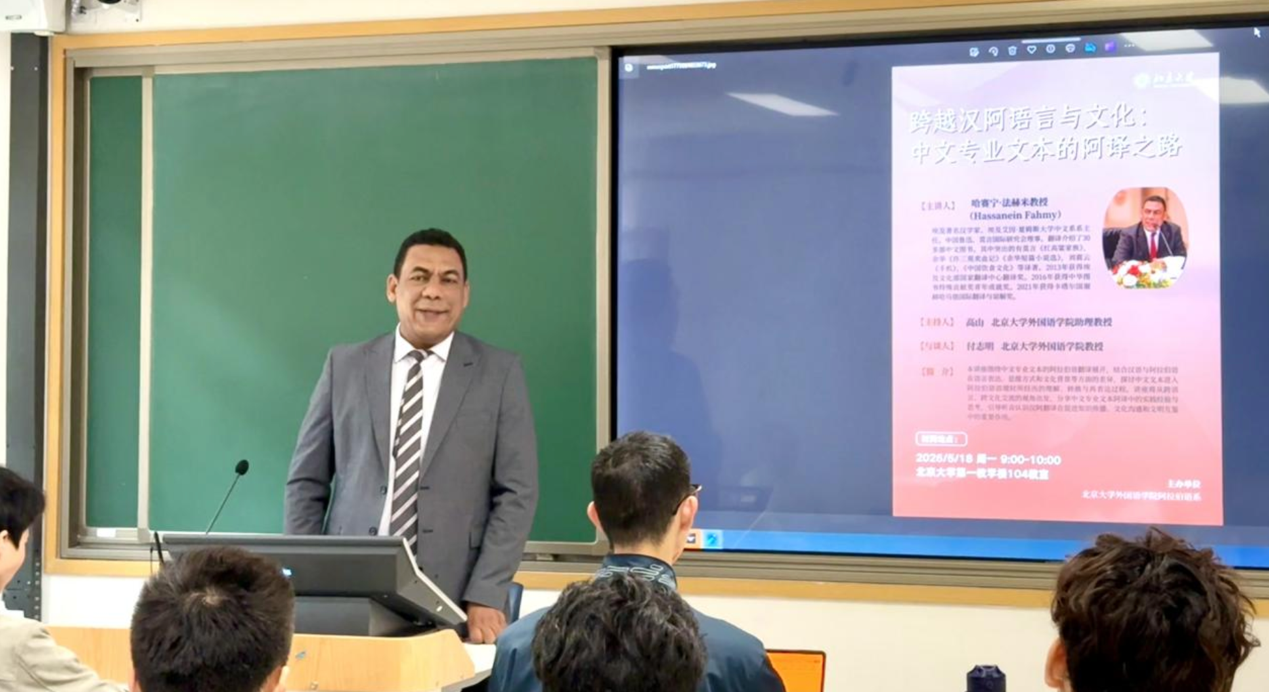
Keynote Speech by Professor Hassanein Fahmy Hussein
Professor Hassanein delivered a systematic exposition on the current state of Chinese-Arabic translation, practices in literary translation, and talent cultivation frameworks. First, he introduced the achievements of the “Reading China” book translation series, an initiative he spearheaded in 2017. The series has been designed to break down the barriers posed by relying on third-language intermediary translations and is committed to direct translation between Chinese and Arabic. It has to date produced over 100 works spanning literature, history, culture, and science and technology, to present an authentic image of China to Arab readers. Professor Hassanein then drew on his experiences translating works by Mo Yan, Yu Hua, and other authors to stress that literary translation is not a simple linguistic transposition, but requires a deep deciphering of the cultural, historical, and social contexts underpinning the original text. He shared the story of how, in order to render the rural imagery in Mo Yan’s works accurately, he personally visited Gaomi in Shandong Province, conducting field visits and consulting Mo Yan’s fellow townspeople, highlighting the point that a translator must act as a bridge between the author and the author’s formative environment. Professor Hassanein also discussed the translation of specialized books such as Chinese Food Culture, pointing out the significant role translation plays in countering the biases propagated by some Western media about China.
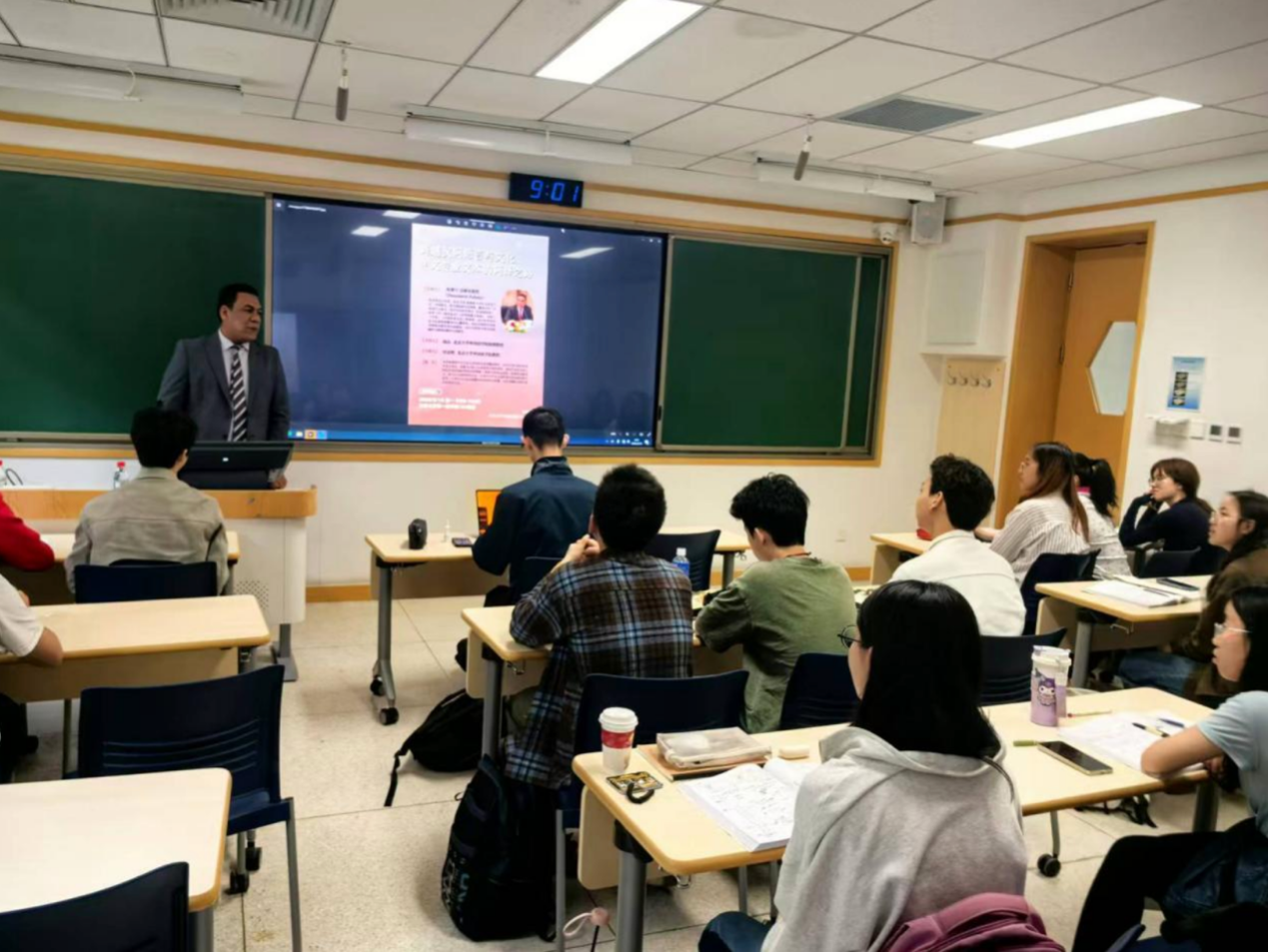
Interactive Q&A Session
During the interactive Q&A session, Zhou Siyan, a first-year undergraduate student in the Department of Arabic Language and Culture, raised questions regarding how to reflect the differences between Chinese dialects and standard Mandarin in translation, as well as strategies for translating classical Chinese and vernacular Chinese into Arabic. In response, Professor Hassanein drew on the example of Liu Zhenyun’s Cell Phone. He explained that choices regarding linguistic register should take into account factors such as character identity, narrative context, and readers’ expectations. While ensuring that cultural differences are accurately communicated, translators should also be granted a degree of creative autonomy in the translation process.
Concluding Remarks by Professor Fu Zhiming
In the concluding session, Professor Fu Zhiming spoke highly of Professor Hassanein’s academic contributions and his discerning choice of research topics. Professor Fu stressed that the core mission of translation is to assist target readers in understanding foreign cultures, and that the cultivation of top-tier translators demands an extraordinary level of dedication, the perseverance to endure long and solitary scholarly pursuits, and professional competence that surpasses the capabilities of AI tools.
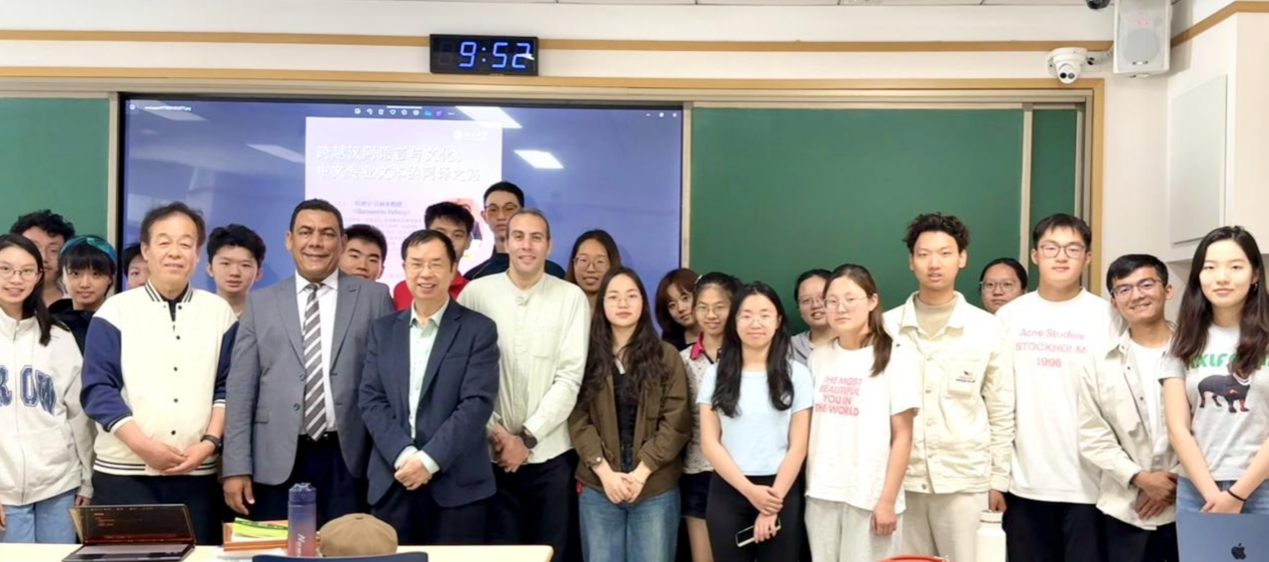
Group Photo of Attendees
After the lecture, Professor Hassanein Fahmy Hussein visited the King Abdulaziz Public Library, Peking University Branch with great enthusiasm. He expressed high appreciation for the library’s collections and reading environment and pledged to donate Arabic translations of works on Chinese culture, history, and literature translated by himself and other Egyptian translators.
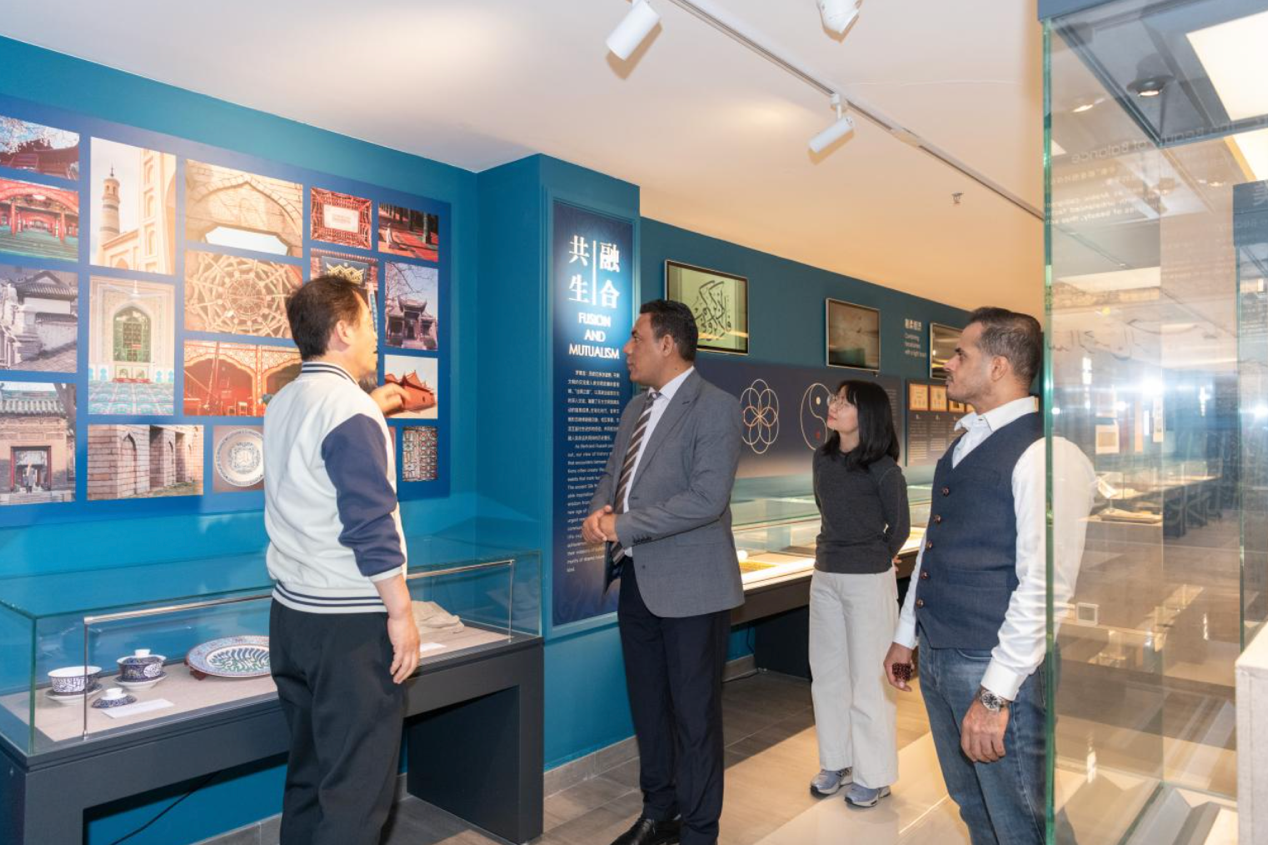
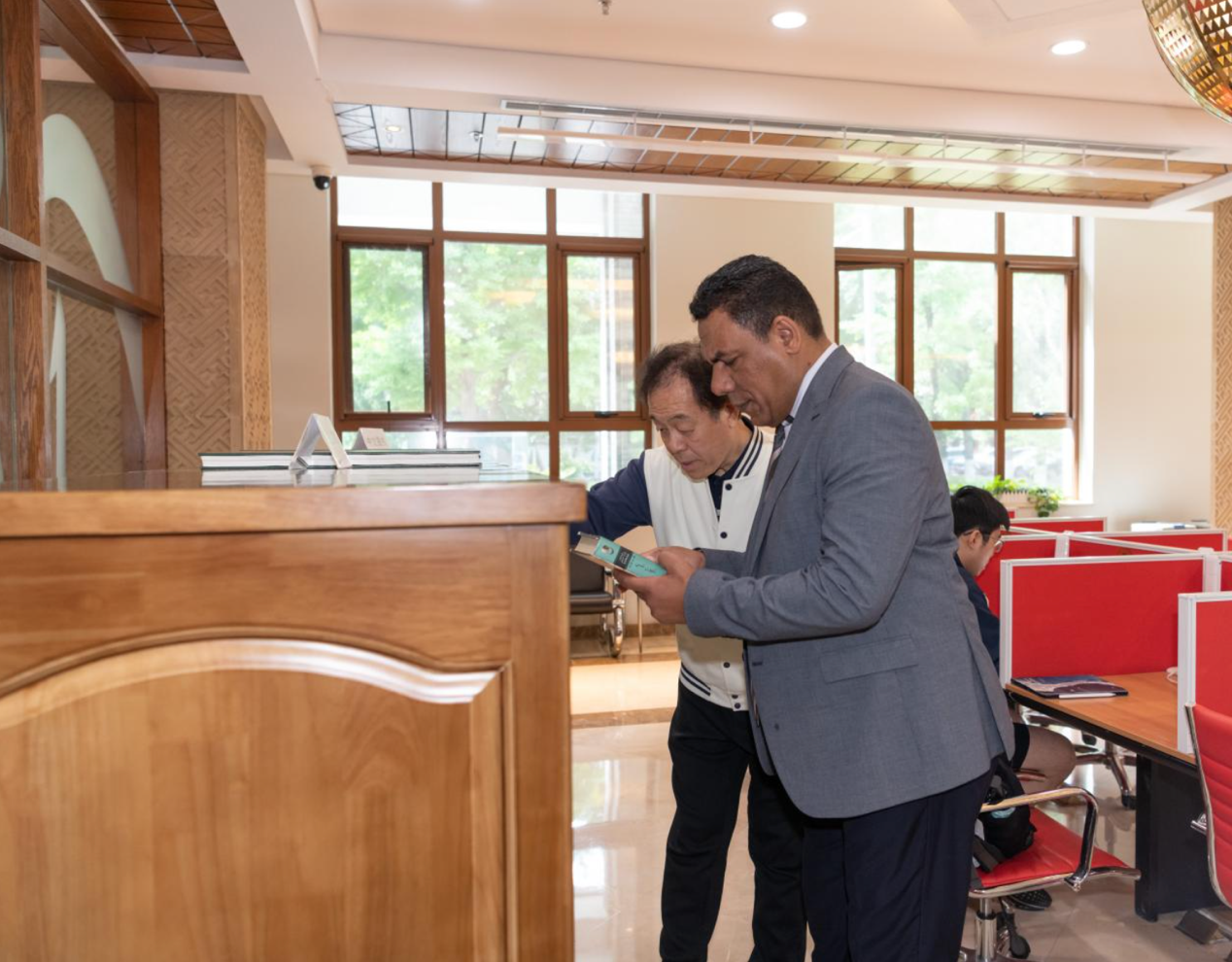
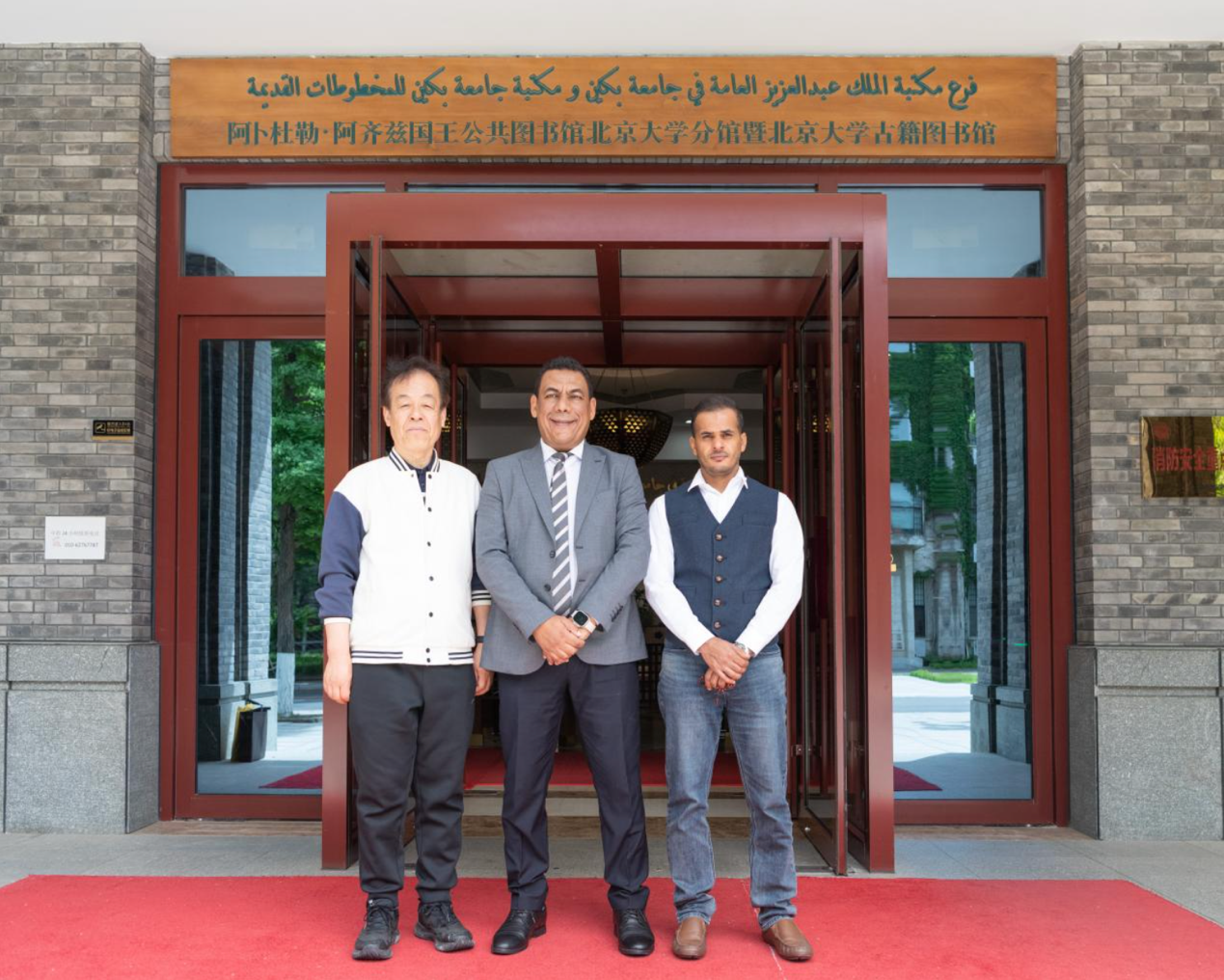
Photos: Visiting the Library
Contributed by the Department of Arabic Language and Culture, School of Foreign Languages, Peking University
Translated by Hou Yifan